The room can sense you. It just can't see you.
Stillsense doesn't use a camera, a microphone, or a wearable. It works by reading the Wi-Fi signals that already fill every room — and noticing how they change when a person moves through them. From those changes, it understands presence, movement, and falls, all worked out on a small device in the home. Here's how, in plain language — and in the detail an engineer or a procurement team will want.
Wi-Fi is already touching everything in the room.
The Wi-Fi in a home is constantly bouncing off walls, furniture, and people. Every time someone moves — a step across the floor, the rise and fall of breathing, a sudden fall — they change the way those signals travel, in tiny but measurable ways. Most devices throw this information away. Stillsense reads it.
It's the same physics a router quietly handles millions of times a second; Stillsense simply listens to it differently, and turns it into an understanding of what's happening in the space.
From signal to safety, in three steps.
No camera, no recording — just a small device that reads the room and acts only when it matters.
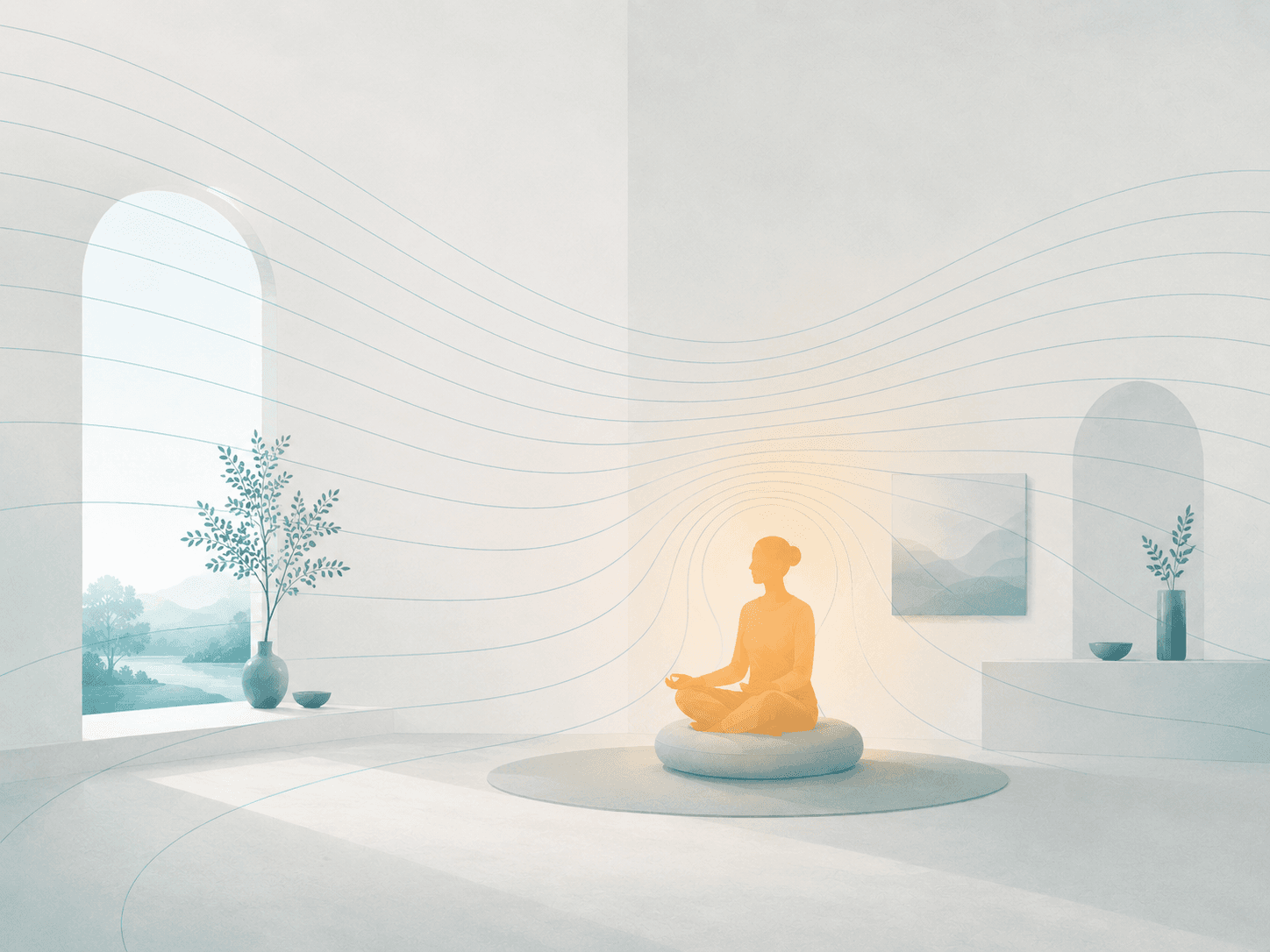
Sense.
A small Stillsense sensor pairs with the Wi-Fi in the room and continuously reads the fine detail of the signal — what engineers call Channel State Information. No image is ever formed, because there’s no camera to form one.
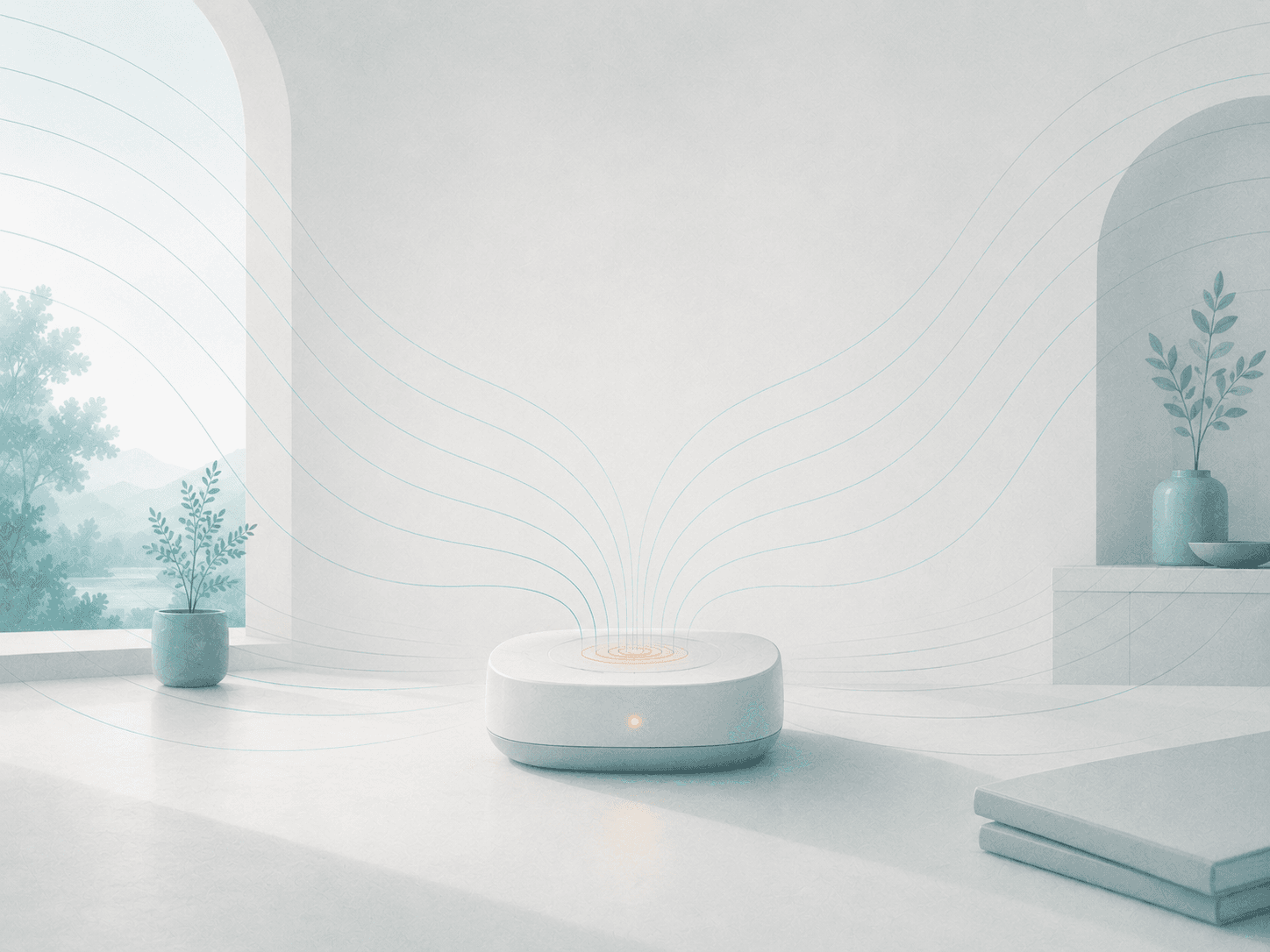
Understand, on the device.
Stillsense interprets those signal changes directly on the device — recognising presence, motion, and falls, and learning the ordinary rhythm of a normal day so it knows what “unusual” looks like. This happens at the edge, in the home. It does not depend on the cloud, and the raw signal never leaves the room.

Tell the right person.
When something matters, Stillsense sends a clear, calm alert to the right carer or family member — through the systems they already use. The rest of the time, it stays silent. No noise, no false drama.
Privacy
There's no picture, because no picture is ever made.
The most common worry about monitoring is “who can see into the room?” With Stillsense, the honest answer is: no one, ever — because seeing isn't how it works. There is no lens and no recording. What Stillsense produces is an interpretation of movement, computed on the device — the raw signal never leaves the room. You couldn't reconstruct an image from it if you tried, because the visual information simply never existed.
That's what makes it acceptable in the most private rooms of a person's life — the bedroom, the bathroom — where a camera could never go.
Privacy at a glance
- No camera, no microphone, no video — ever
- Sensing and inference happen on the device, at the edge — the raw signal never leaves the room
- No images are captured or stored, because none are created
- Designed around GDPR and personvern from the first line of code
- You decide what’s shared, with whom, and when
Built to be trusted in real homes, not just labs.
Sensing movement from Wi-Fi is well understood in research; making it dependable in a real, lived-in home — with pets, draughts, visitors, and furniture that moves — is the hard part, and it’s where we focus.
Whole-room, no blind spots.
Because Stillsense senses the whole space rather than a camera’s cone of view, it doesn’t have a corner it can’t see. It works in the dark, under blankets, and around obstacles.
It learns the normal.
After a short calibration, Stillsense learns the ordinary pattern of a space, so it can tell a genuine event from everyday life — and keep false alarms low. A system that cries wolf gets switched off; quiet accuracy is the whole point.
It runs at the edge.
Detection happens on a low-cost device in the home, in real time, without depending on an internet connection — which matters for both reliability and privacy.
Honest about confidence.
Stillsense tells you what it knows (“no movement detected since 22:40”), not what it can’t (“the resident is safe”). We never imply certainty we don’t have.
We’ll only ever claim what we can stand behind.
WiFi sensing is a fast-moving field, and not every capability is equally mature. We’d rather tell you plainly where each one stands than let you discover the gap later. Here’s the honest picture.
| Capability | Status | What that means |
|---|---|---|
| Presence detection | Available | Knowing whether someone is in a room, reliably and in real time |
| Motion & activity | Available | Recognising movement and the rhythm of a normal day |
| Bed-exit & night activity | Available | Noticing when someone gets up, or has a restless night |
| Fall detection | Available, under independent validation | Detecting likely falls in real time; we’re completing a formal validation study before making any safety-grade guarantee |
| Whole-home coverage | Available, improving | Sensing across rooms from few devices; range depends on the home’s layout |
| Breathing-rate monitoring | Available, under independent validation | Contactless respiration trends during sleep; we’re completing a formal validation study before making any clinical or safety-grade guarantee |
| Heart-rate monitoring | Available, under independent validation | Contactless heart-rate trends; we’re completing a formal validation study before making any clinical or safety-grade guarantee |
Presence detection
AvailableKnowing whether someone is in a room, reliably and in real time
Motion & activity
AvailableRecognising movement and the rhythm of a normal day
Bed-exit & night activity
AvailableNoticing when someone gets up, or has a restless night
Fall detection
Available, under independent validationDetecting likely falls in real time; we’re completing a formal validation study before making any safety-grade guarantee
Whole-home coverage
Available, improvingSensing across rooms from few devices; range depends on the home’s layout
Breathing-rate monitoring
Available, under independent validationContactless respiration trends during sleep; we’re completing a formal validation study before making any clinical or safety-grade guarantee
Heart-rate monitoring
Available, under independent validationContactless heart-rate trends; we’re completing a formal validation study before making any clinical or safety-grade guarantee
If a capability isn’t in the “Available” column, we won’t sell it as if it were. That discipline is part of what makes the rest trustworthy.
A few minutes to set up. Hosted your way.
Stillsense runs on commodity Wi-Fi hardware and a small, low-cost sensor — not a rewiring project, and a fraction of the cost of camera- or radar-based supervision. Choose how it’s hosted: keep everything on-premises, or let us run the management plane for you on Stillsense Cloud.
Either way, the edge does the sensing. The raw Wi-Fi signal never leaves the building, and no picture of a room ever exists — Stillsense Cloud only ever holds the interpreted events, in Norway.
Self-hosted (local)
Everything stays on your premises.
- Sensing, inference, dashboard and alerts all run on local hardware in the building
- No data leaves the premises — nothing to host, nothing extra to subscribe to
- Local-first: works with no internet connection at all
- Integrates with the response-centre and journal systems you already run
Stillsense Cloud (managed)
We host the management plane, in Norway.
- The sensor still does all sensing at the edge — only interpreted events sync to the cloud
- Remote dashboards, multi-site fleet management, and remote alerting without running your own server
- Hosted on UpCloud in Norway, with Norwegian data residency; you control what is stored and for how long
- Local-first by design: sensing and alerting keep working even if the connection drops
The proof behind the promise.
We hold ourselves to the standards this responsibility demands — privacy by design and a DPIA-ready posture for personvern, integration with national welfare-technology infrastructure, and an independent validation study for our safety-critical detection. As that evidence is published, you'll find it here.
See what a room can sense.
Quietly, in your own setting
Tell us a little about where you'd use Stillsense, and we'll show you how it works — quietly, and in your own setting.