Safer nights. Calmer rounds. No camera in the bedroom.
Stillsense gives care teams quiet, continuous awareness of the people they look after — sensing presence, movement, and falls through the Wi-Fi already in the room. No cameras, no wearables, no sensor in every corner. Just the right alert, to the right person, at the moment it matters.
Built for how care actually happens.
Stillsense works across the settings where supervision is hardest and matters most.
Nursing homes sykehjem
Continuous night supervision without disruptive physical rounds.
Home care hjemmetjeneste
Whole-home awareness between visits, so a long drive isn't the only way to know someone is alright.
Assisted living omsorgsboliger
Dignity and independence, with a safety net that stays out of the way.
Awareness that earns its place.
Continuous, quiet supervision that speaks up only when it should — across the moments that matter most in care.
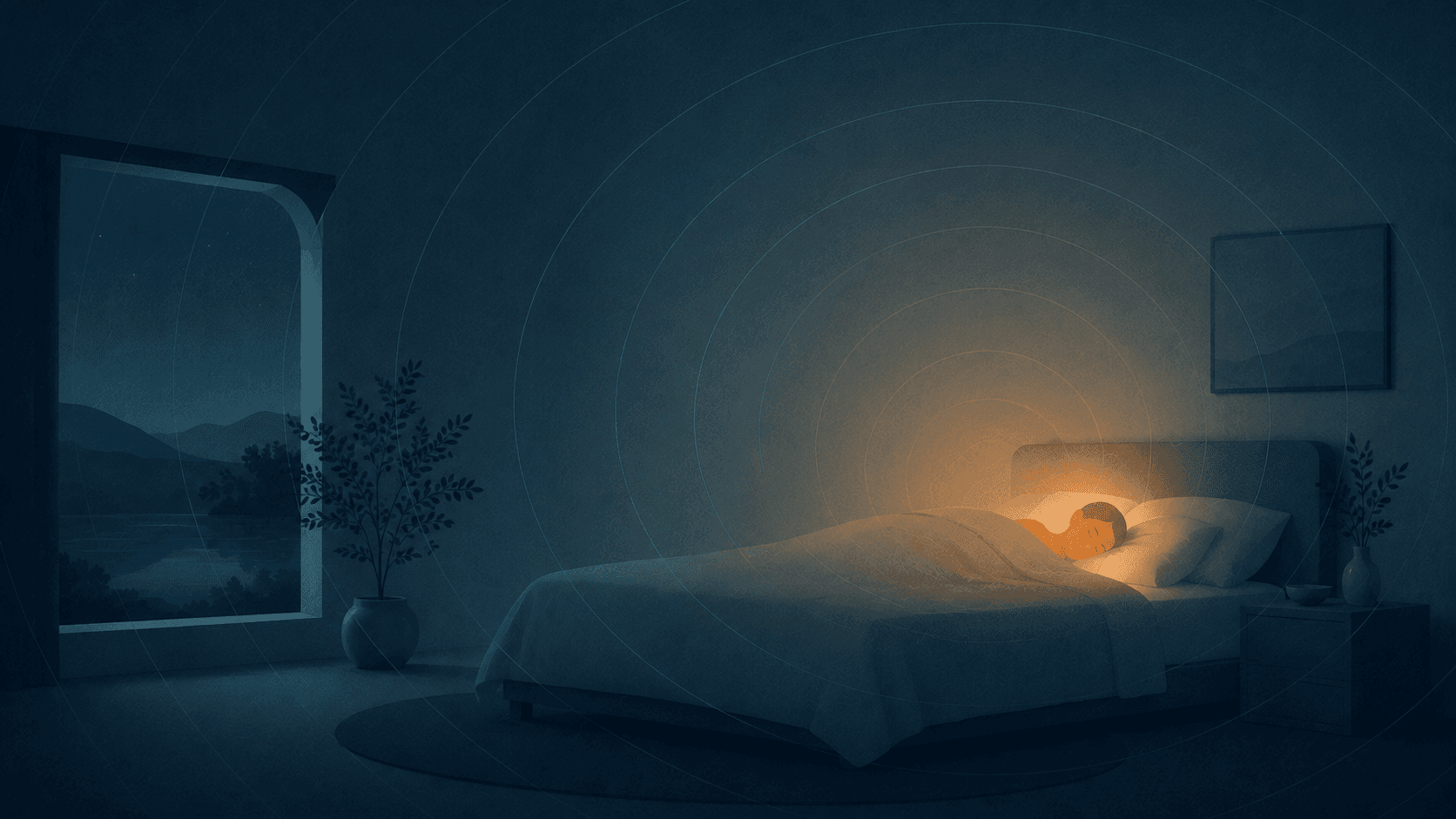
Night supervision, without waking anyone.
Stillsense watches over residents through the night without a carer entering the room. The people who are sleeping soundly stay undisturbed; the ones who need attention are the ones you hear about. Fewer routine rounds, better-spent nights.
Falls and bed-exits, the moment they happen.
The highest-risk moment in care is often someone getting up alone at night. Stillsense senses bed-exits and likely falls in real time and alerts staff immediately — so help arrives in minutes, not at the next scheduled check.
The morning someone didn't get up.
Stillsense learns the ordinary rhythm of a person’s day and notices meaningful departures from it — a night of unusual restlessness, a morning without the usual movement. It surfaces the quiet signs that something has changed, before they become emergencies.
Coverage where a camera or radar never reached.
Because it senses the whole space from the Wi-Fi already there, Stillsense covers rooms a per-room sensor budget was never going to reach — especially across an entire home in home care.
The privacy case
The watchfulness people accept in their most private rooms.
Cameras stop at the bedroom door, and rightly so. Stillsense doesn't — because there's nothing to see. No camera, no microphone, no image is ever created; only an understanding of movement, computed on a device in the home — the raw signal never leaves the room. That's what makes it acceptable in bedrooms and bathrooms, where dignity matters most and where the risk is often highest.
For your organisation, that also means a far simpler conversation with residents, families, and personvern requirements.
What it means for you
- No images captured or stored, because none are created
- Sensing and inference on the device, at the edge — the raw signal never leaves the room
- Privacy by design, with a DPIA-ready foundation for personvern (GDPR Art. 6(1)(e)/9(2) public-task basis)
- A clear, honest answer to the question every family asks: no one can see in, because seeing isn’t how it works
- Personvern by design
- DPIA-ready
- No camera, ever
The savings are already proven. Stillsense makes them affordable.
Digital supervision (digitalt tilsyn) is already the single welfare-technology solution with the largest documented gains for Norwegian municipalities — an estimated NOK 1.1 billion a year, averaging around 3.4 full-time roles per municipality (KS / Oslo Economics, 2024). The case for sensing-based night supervision is made. The barrier has been cost and installation: a dedicated unit in every room, and an electrician's bill of NOK 20,000–40,000 per resident room to match.
Stillsense changes that maths. It retrofits onto the Wi-Fi a home already has, with a small, low-cost sensor and minutes of setup — bringing the proven benefits of digital supervision within reach at the scale services actually need, including in home care where per-room hardware was never realistic.
~3.4
roles / municipality / year
Documented average time saving from digital supervision (KS / Oslo Economics, 2024)
20–40k
NOK per resident room
The per-room install cost Stillsense is designed to avoid
Minutes
not construction
Typical setup time per room
The NOK 1.1 bn, ~3.4-roles, and NOK 20–40k figures describe digital supervision sector-wide and the incumbent install cost (KS / Oslo Economics) — not Stillsense's own measured results.
A new sense, not a new system to run.
Stillsense is designed to sit inside the way Norwegian care services already operate — not to replace your response centre or your journal system. Alerts route to the response service (responstjeneste) and care teams already use, and the platform is built to integrate with municipal journal systems through national welfare-technology infrastructure.
- Integrates with response-centre platforms and the systems care teams use today
- Built for journal/EPJ integration via the Velferdsteknologisk knutepunkt (VKP)
- Works as the sensing layer alongside the providers you may already work with
- One calm dashboard for staff — clear status, clear alerts, no noise
Made to be easy to buy — and to fund.
We know welfare technology is bought through public procurement (anskaffelse), often jointly across municipalities, and increasingly funded through national schemes. Stillsense is built to fit that reality, and we help you navigate it.
Helseteknologiordningen-ready
Stillsense fits the digital-supervision priorities the national scheme funds, and we support joint (inter-municipal) applications.
Procurement-ready documentation
A clear capability one-pager, a DPIA template you can reuse, and a security & compliance sheet — the documents your evaluation actually needs.
Designed for pilots first
Start with a focused pilot in one ward or a handful of home-care users, prove the value in your own setting, then scale through framework agreements.
We claim only what we can stand behind.
Stillsense detects presence, movement, bed-exits, falls, breathing-rate during sleep, and heart rate today. Fall detection, breathing-rate, and heart rate each carry an independent validation study before any safety-grade or clinical guarantee. We don't offer detailed-posture monitoring, because it isn't dependable enough for real homes yet — and we won't put anything in front of a vulnerable person before it is.
See our evidence & validationFor the people whose parents this is really about.
If someone you love is being cared for with Stillsense, here's what matters: they are not being filmed, and they are not being asked to wear or carry anything. They can sleep, move, and live in their own rooms with their dignity intact — while the people responsible for them know, quietly and quickly, if something is wrong. It's the reassurance of someone keeping an eye out, without anyone looking in.
Start with one ward, or a handful of homes.
A pilot in your own setting
The best way to see what Stillsense can do is a small pilot in your own setting. Tell us where supervision is hardest for your team, and we'll show you how it would work — and help you fund it.